What is Technical Debt?
We previously defined technical debt as the future costs associated with relying on shortcuts or suboptimal decisions made during software development.
The idea aligns with the proverb "An ounce of prevention is worth a pound of cure": adopting best practices early in the development process can prevent the need for costly fixes later.
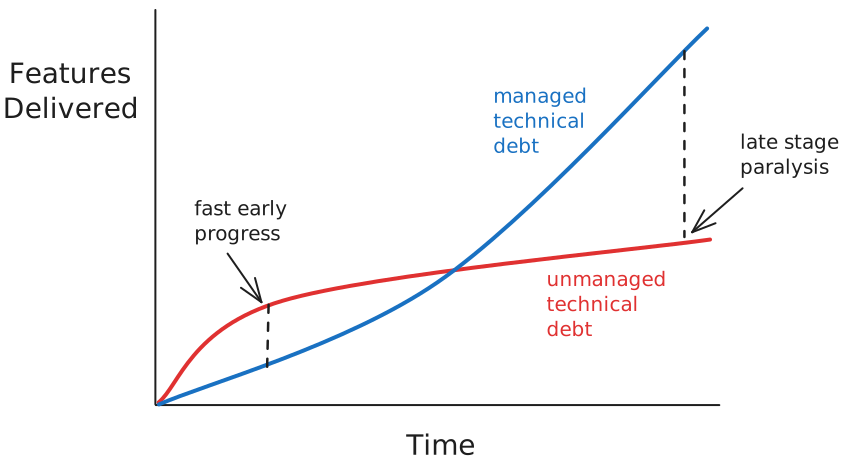
Let's take a look at the image above.
On the x-axis is "time": the left side is early in the development process, the right side is late in the development process.
On the y-axis is "features delivered": early in the project there are no features. They are added over time.
The two curves represent two different projects:
Poor Technical Debt Management
The project in red does not manage technical debt well. This curve roughly has a logarithmic shape as the project progresses.
It may seem like quick progress early indicates that the project is off to a good start, but the reality is that the project is likely to fall behind later. It may even reach a point where nothing can be changed without breaking the system, and the project is effectively dead.
Well-Managed Technical Debt
The project in blue follows good practices for managing technical debt. This curve roughly has an exponential shape as the project progresses.